
This series of photographs tells a story that many people in regenerative lawn care know all too well.
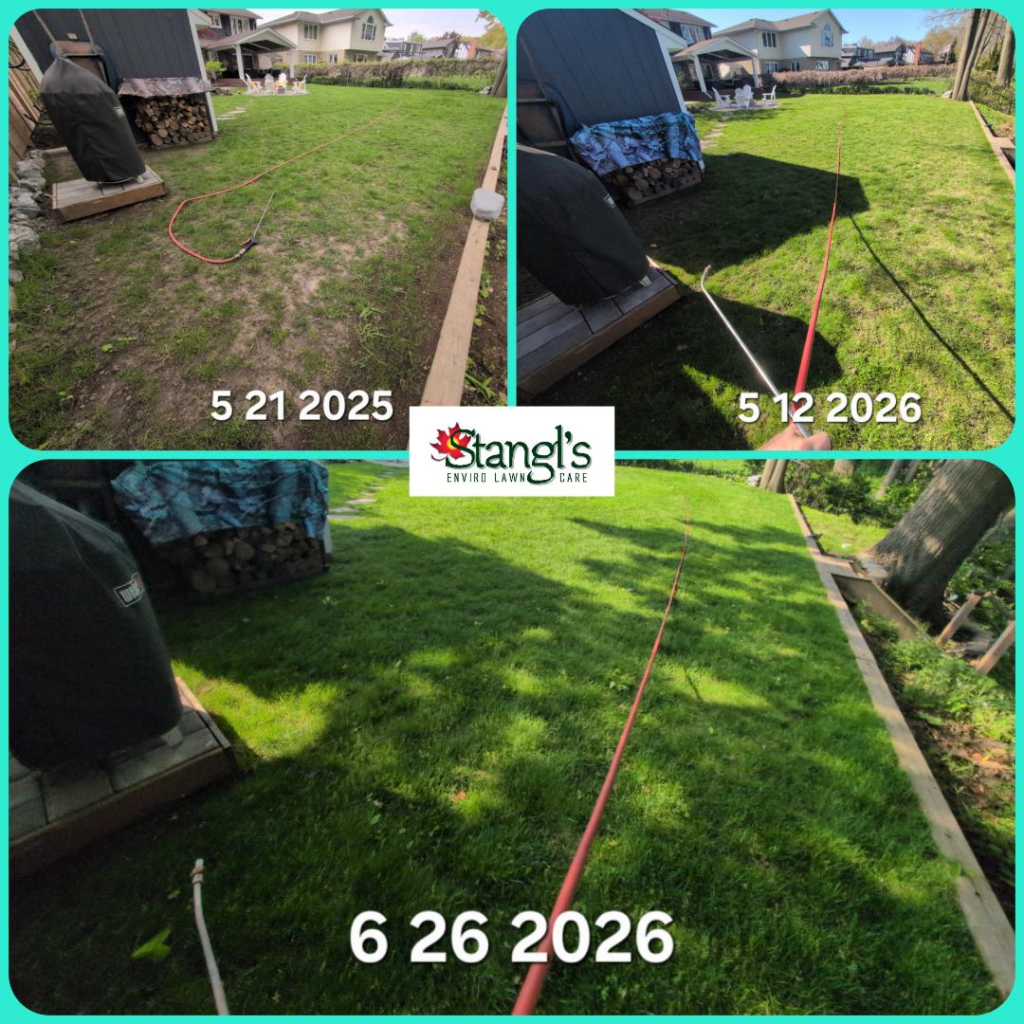
The first image was taken on May 21, 2025, shortly after we started working with this property. The lawn was thin, patchy, and the soil looked tired.
Fourteen months later the change is clear — even though they were still cutting it short. The turf is much fuller, darker green, and the bare soil has mostly disappeared. We didn’t get these results by pushing fertilizers or using herbicides. We got them by rebuilding the soil’s biology, mineral balance, and structure.Then, on July 9, 2026, we received this message:
Hello,
We would like to discontinue the lawn program at [address] for the foreseeable future. It has been a pleasure dealing with you.
Sincerely,
[Homeowners]
I shared this exact progression on July 10th and 11th to groups for feed back at the Horizons Agriculture Gathering in Saskatchewan. I was speaking with regenerative farmers, soil health professionals, researchers, and educators from around the world. When I showed the final photo and explained that the customers had cancelled despite the clear improvement, they went quiet. Many were genuinely surprised — some couldn’t quite believe it.
This highlights one of the biggest challenges in regenerative work today.
For generations, people have been taught to judge a lawn by what’s easy to see: green colour, no weeds, and fast results from chemicals. Almost nobody was taught to look at what’s actually happening in the soil.Regenerative management asks different questions:
- Is the soil healthier than it was last year?
- Is water infiltrating better?
- Is the soil structure improving?
- Are biology, carbon, and root systems growing?
- Is the lawn becoming naturally resilient instead of dependent on inputs?
The photos above show real progress — fourteen months of rebuilding rather than just masking problems. That’s the difference between treating symptoms and restoring the system that actually grows the lawn.
At Stangl’s we believe a healthy lawn starts with healthy soil. The process takes patience, observation, and working with nature, but the results last.
Our door is always open. If these homeowners ever want to continue their soil health journey, we’d be happy to pick up where we left off and keep building on the progress already made.
“Nature doesn’t work in applications — it works in processes. Our job is not to force a result, but to restore the system that creates it.”