Hello, lawn enthusiasts! Let’s dive into a teaching moment on how insects and diseases fit into the bigger picture of lawn health. We’ve already explored where plants truly get their nourishment—mostly from the air (97% carbon, oxygen, hydrogen, nitrogen) with just 3% minerals “farmed” from the soil via microbes. But our conventional management practices, like synthetic fertilizers followed by weed killers, insect controls, and disease suppressants, have disrupted this natural harmony. These “quick fixes” play havoc on soil balance and life, killing beneficial microbes, depleting organic matter (OM) and carbon, and furthering backward momentum toward compacted “dirt.” Fertilizers spike salts and EC, weed killers eliminate diversity, and pest/disease sprays wipe out predators, creating imbalances that nature must “fix” through succession.
Nature engages at any level of disturbance to move forward—healing the soil and increasing diversity from the plants above to the biology below. During this process, insects and diseases aren’t random villains; they’re tools deployed by nature itself to advance health. They target weak plants, destroying them to boost OM and carbon via decomposition—nature’s way of rebuilding. Low OM/carbon is often the core culprit, leading to low plant Brix and vulnerability. As Brix rises (like my 15/16 in 2025), issues plummet: Pests can’t digest high-Brix plants, and diseases lose ground to balanced biology. Nowhere in nature is it homogeneous—we can mimic this diversity to leapfrog ahead, but most lawns or fields face a transition where minerals loosen and become available, janitors (weeds) appear to mop up excesses or scavenge deep as divining rods, Brix increases, and the biology stabilizes.
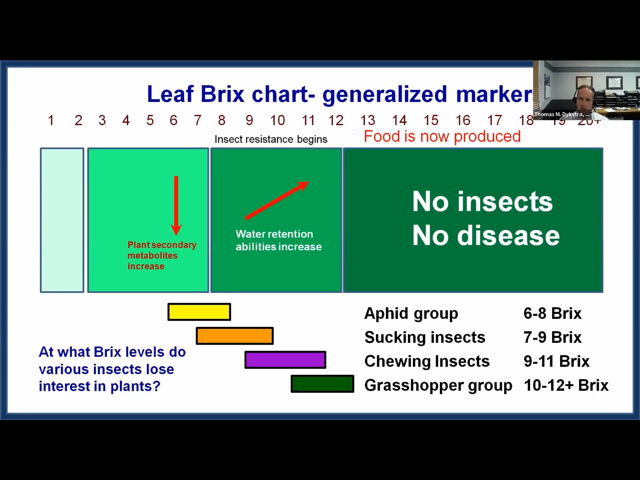
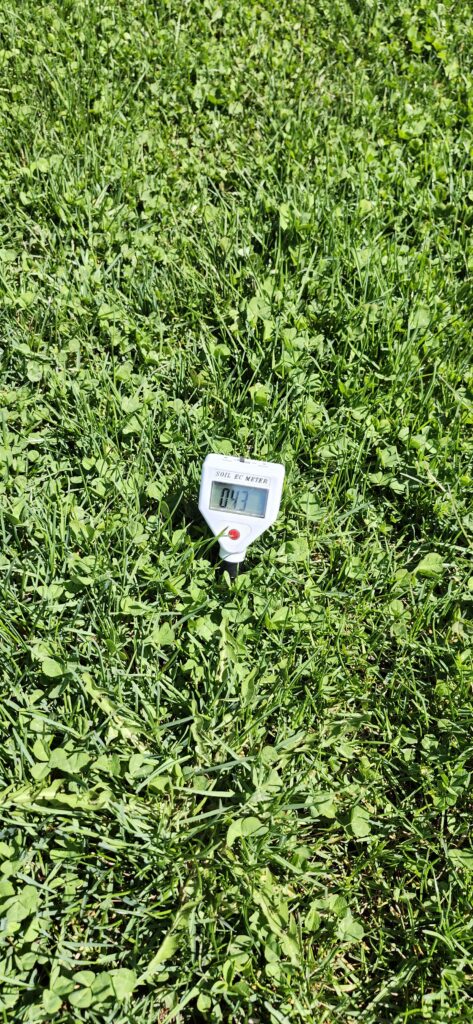
To understand this better, let’s draw from key experts who teach us the interconnectedness of it all. Glen Rabenberg emphasizes the soil’s “pulse” via electrical conductivity (EC) and energy balance, showing how high and low pressure systems in the atmosphere drive gas exchange into the ground. Thomas Dykstra highlights how high Brix repels insects through infrared emissions and indigestibility. Elaine Ingham teaches that a diverse soil food web suppresses pathogens via competition and predation. Ewan Campbell pulls it together with biological transmutation (microbes converting elements), radionics, and paramagnetism for energetic harmony. Pests and diseases signal these management flaws: High EC from synthetics “electrocutes” life (Rabenberg), inviting decay; insects sense low-energy plants (Dykstra); a lack of predators allows outbreaks (Ingham); imbalanced paramagnetism hinders transmutation, weakening resilience (Campbell).
Glen Rabenberg dives deep into the dynamics of high and low pressure systems in soil health, framing them as key players in how air (and its diverse gases) interacts with the ground—much like the “as above, so below” principle, where the atmosphere’s complexity (not just O2 and CO2, but N2 at 78%, argon at 0.93%, trace gases like neon/helium, water vapor, and even pollutants) mirrors the intricate web of soil life and minerals. In his teachings (e.g., from “Soil Health 101” and podcast episodes on compaction and fungal pressures), Rabenberg explains that high-pressure atmospheric fronts create “heavy, sinking air” that naturally pushes oxygen and other gases into the soil profile, energizing microbial activity and nutrient cycling. This is crucial for preventing issues like red thread disease (a fungal pathogen, Laetisaria fuciformis), which thrives in low-oxygen environments caused by compaction—essentially a “low-pressure” trap where air can’t penetrate, leading to anaerobic conditions that favor fungal outbreaks.
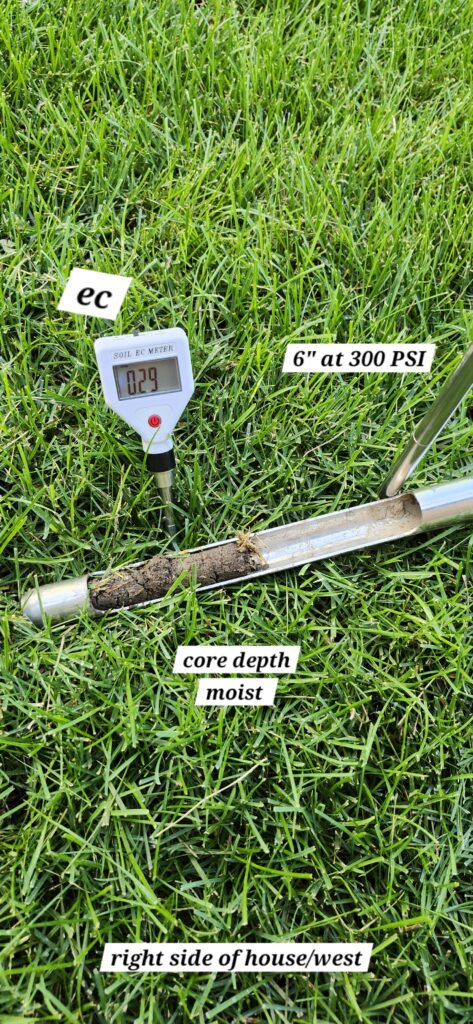
Compaction acts as the primary limiter here, blocking this atmospheric exchange and creating stagnant, low-O2 zones where diseases like red thread explode, especially in cool, wet conditions with slow-growing turf (often from low nitrogen or other stresses). Rabenberg ties this to overall energy flow: High soil pressure from compaction reduces the “pulse” (measured via electrical conductivity, or EC, ideally 0.2-1.0 mS/cm), starving biology of oxygen and leading to deficiencies. Low OM and carbon exacerbate it—without enough organic matter (aim for >6%), soil can’t hold air or water properly, further limiting life. All these factors interconnect, per Russell Ackoff’s systems thinking: The soil isn’t just parts (e.g., NPK or O2 alone); it’s the product of interactions—compaction restricts gas/mineral flow, low OM/carbon reduces buffering, and diminished microbial life (e.g., fungi/bacteria balance) fails to transmute elements or cycle nutrients, creating a vicious cycle.
To break it: Focus on building OM/carbon (e.g., via compost extracts like our Nature’s Brew with Squid Juice) to flocculate soil (improving structure and releasing K/Ca/P/Mg/Zn/Mn), enhancing air infiltration during high-pressure fronts. Measure with penetrometers (<300 psi resistance), EC meters, and refractometers (Brix >12-15 for resilient plants). As you address these limits, biology thrives, turning “dirt” into soil that naturally resists low-O2 diseases like red thread—no quick fixes needed, just holistic regen to let the system self-regulate.
Water plays a huge role in transitions—biology lives in solution, needing balanced channels for moisture and air. Too much/too little shifts life, triggering “unwanted” plants via chemistry (not just NPK, as “pros” claim). Overwatering favors bacterial dominance and diseases; drought stresses, inviting insects. At Stangl’s, we monitor these with penetrometers (compaction <300 psi), EC meters (0.2-1.0 mS/cm), refractometers (Brix >12-15), soil chemistry tests, and microscopes (balanced fungal:bacterial ratios). Our Nature’s Brew (molasses, kelp, squid juice, microbes) + PUC/SRC leapfrogs succession, feeding rhizophagy, building OM/carbon, and fostering resilience—most lawns see mineral loosening, janitors (weeds/insects) appearing briefly to mop up or scavenge deep, but issues fade as Brix climbs and biology stabilizes.
The industry—built on 1840 NPK and war chemicals repurposed for profits—needs to school up. Anyone can kill or apply fertilizer; that’s why they do it, creating billable cycles (e.g., yearly aeration as a “cash cow” without fixing compaction). There’s no one teacher—I’ve been learning since 1981, blending these experts to evolve beyond the narrative accepted by homeowners, managers, lawn/landscape/tree companies. Here’s a breakdown of common issues—why they’re there, their role, and how to control naturally by leapfrogging limits.
Here’s a breakdown of common lawn insects and diseases—why they’re there, their role, and how to control naturally by leapfrogging limits.
Common Lawn Insects and Diseases: Indicators, Roles, and Regen Management
| Issue | Key Indicators (Soil/Plant Issues) | Role/Job (How It Advances Health) | Microbial Preference (Bacterial/Fungal) | Tips to Leapfrog (Natural Control) |
|---|---|---|---|---|
| Grubs (e.g., Japanese Beetle Larvae) | Low OM/carbon, compacted, bacterial dominance, low Brix; from fertilizer/spray disruptions | Consume weak roots, adding OM/carbon via decomposition; signal poor structure to trigger succession | Bacterial (early succession) | Boost OM with Nature’s Brew; encourage predators (nematodes/protozoa via Ingham’s methods); high Brix (>12) makes roots indigestible (Dykstra). Measure EC to ensure energy flow (Rabenberg). |
| Chinch Bugs | Low OM, drought stress, high N, bacterial soils, low paramagnetic energy; synthetic spikes | Suck sap from weak plants, excrete to cycle nutrients; indicate imbalanced “electrical salts” from chemicals | Bacterial-dominant | Build carbon/OM to retain water; paramagnetic amendments (basalt) balance energy (Campbell); refractometer checks Brix for resistance. |
| Sod Webworms | Low OM/carbon, compacted, low fungi, disease-prone turf; from repeated sprays | Larvae chew roots/leaves, adding biomass/OM; advance succession by breaking down weak tissue | Bacterial (warm-season) | Foster fungal networks (Ingham) with woody mulches + PUC/SRC; transmutation via microbes converts elements for health (Campbell); penetrometer monitors compaction relief. |
| Aphids | Low Brix, high N, bacterial imbalance, low predators; fertilizer excess | Sap-suckers on stressed plants; excrete honeydew feeding ants/fungi, cycling nutrients | Bacterial | Raise Brix (>8-12) to repel (Dykstra—no aphids at 8+); introduce protozoa/nematodes for balance (Ingham); EC optimal prevents “electrocution” of biology (Rabenberg). |
| Japanese Beetles (Adults) | Low OM, bacterial soils, mineral deficiencies (e.g., low Zn/Mn); spray disruptions | Defoliate weak plants, adding OM; signal low energy fields from degraded systems | Bacterial-dominant | Paramagnetic soils enhance resistance (Campbell—balanced “pulse”); high Brix leaves unchewable (Dykstra: 10-12 threshold); soil tests guide mineral unlocks via flocculation. |
| Rust (Fungal Disease) | Low fungi diversity, high humidity, bacterial shift, low Brix; from chemical havoc | Attacks weak leaves, cycling back to soil; indicates poor microbial competition from imbalances | Bacterial (pathogen thrives in imbalance) | Diverse food web outcompetes (Ingham—fungi suppress via predators); raise Brix for immunity (Dykstra); radionics tunes energy (Campbell). |
| Dollar Spot | Low N/OM, compacted, bacterial, high EC stress; synthetic protocols | Spots on turf, decomposing weak areas to add carbon; signals succession need | Bacterial-dominant | Lower EC (Rabenberg—avoid synthetics); build OM/carbon with Nature’s Brew to flocculate/release N; microscope checks biomass ratios for balance (Ingham). |
| Brown Patch | High N, moist, low fungi, bacterial excess; fertilizer/spray cycles | Patches from weak turf; increases OM via breakdown to advance healing | Bacterial (warm/moist) | Reduce N synthetics; foster fungi (Ingham) with carbon; high Brix prevents (Dykstra); transmutation balances minerals (Campbell). |
| Powdery Mildew | Shaded, low air flow, low Brix, bacterial soils; disrupted balance | Coats leaves, signaling poor health; excrete cycles nutrients to soil | Bacterial (cool/shady) | Increase light/diversity; Brix >12 repels (Dykstra); beneficial microbes compete (Ingham); optimal EC ensures energy (Rabenberg). |
Advancing to Resilience: Leapfrog the Process
Current paradigms create these issues: Fertilizers spike imbalances, killers reduce diversity, controls wipe predators—furthering degradation. Nature reacts, using pests/diseases to destroy weak plants and increase OM/carbon. But at Stangl’s, we leapfrog through succession with Nature’s Brew (molasses, kelp, squid juice, microbes) + PUC/SRC to feed rhizophagy, build OM/carbon, and restore balance—most lawns transition with mineral loosening (flocculation releases K/Ca/P/Mg/Zn/Mn), brief janitor appearances (weeds), and decreasing issues as Brix climbs and biology stabilizes.
Water’s crucial: Biology needs solution for channels/air—inhospitable summers shift life, triggering chemistry-driven responses (beyond NPK). We monitor to optimize. Fix limits: Low OM/carbon = weak Brix, attracting pests (Dykstra). Bacterial dominance favors diseases (Ingham: no predators). High EC stresses (Rabenberg). Insects sense low energy (Dykstra). Leapfrog by building OM/carbon, balancing biology—e.g., paramagnetic/radionics tune transmutation (Campbell).
At Stangl’s Enviro Lawn Care, we put this knowledge into action every day. With our regenerative approach, we help your lawn evolve beyond conventional dependencies, creating a self-sustaining system that’s resilient and vibrant. Whether you’re dealing with persistent pests or diseases, or simply want to reduce inputs while enhancing health, our team is here to guide you. Contact us today for a free consultation and start unlocking your soil’s true potential—visit stangls.com for more insights!
Rooted in regen,
Unlocking Soil Wealth
Michael Stangl