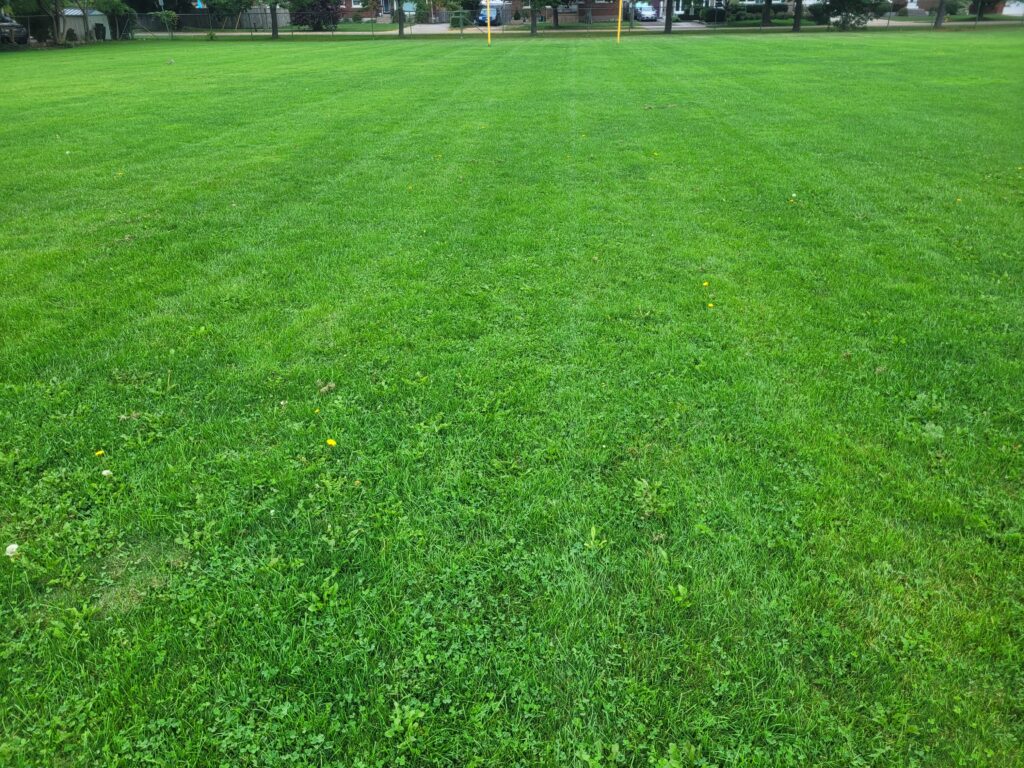
Welcome to Stangl’s Enviro Lawn Care blog, where we’re passionate about turning ordinary yards into resilient, thriving landscapes. If you’re a homeowner in Niagara or across Canada tired of endless chemical cycles, this guide is for you. In 2026, with fluctuating weather and rising costs, regenerative lawn care isn’t just an option—it’s the smart upgrade. We’ll explore the science of living soil, debunk conventional myths, and show how simple shifts can unlock your yard’s potential. Drawing from experts in regenerative farming, our own journey since 1981, and insights from our blog archive at stangls.com/blog, let’s get started. Visit stangls.com or follow @StanglsEnviro on X for more.
Introduction: Hello, Fellow Lawn and Plant Lovers—It’s Time to School Up on Soil
Hello, my fellow lawn and plant lovers—yet your lawn and plants require microbes to create living soil. Homebuilders know next to nothing about soil health, and neither do fertilizer manufacturers, companies, lawn services, tree care pros, landscapers, or those DIY off-the-shelf products. Even academia often falls short. They all “know” conventional, but they need to school up—they’re stuck in the marketing narrative set by industry, using fertilizers and sprays. This isn’t a systems approach looking at the whole but a reductionist system, where regenerative fixes dirt, turning it into thriving living soil, creating resilience so insects and disease won’t be as much of an issue like those fertilize-and-spray programs create.
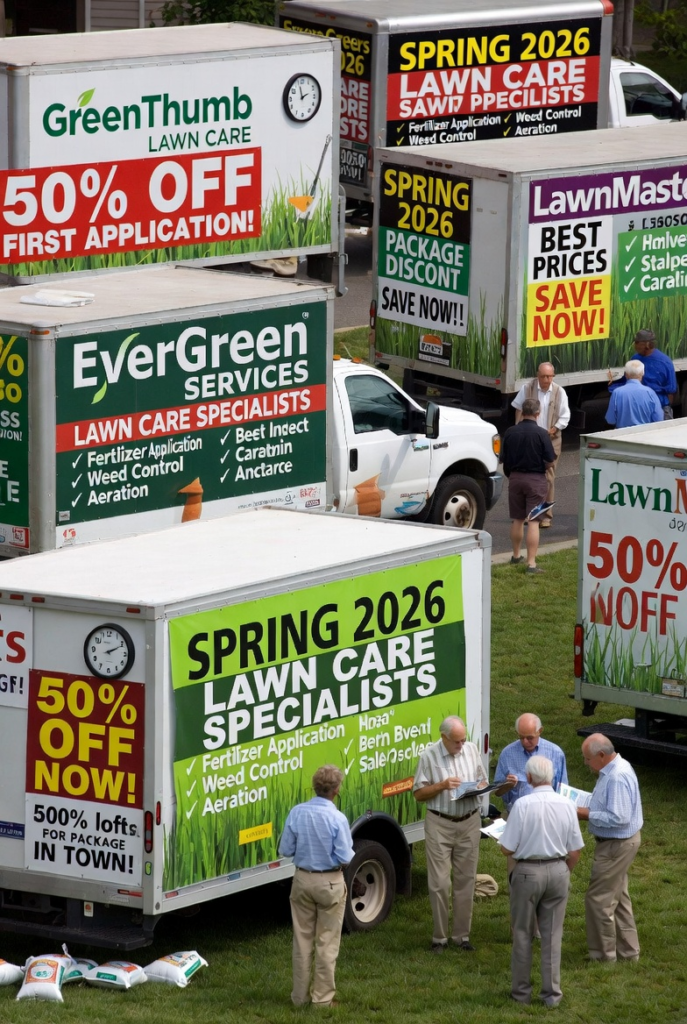
If we take it from Ewan Campbell, they are stuck in a time and need to school up, but it’s easier to stay where they are since they’ve been marketing this way since the 60’s—it’s an easy sell. Spring specials influence the narrative, neighbors and family members reiterate these same echo chambers, then you have online influencers stroking their ego. They all think this is correct, but for the 1960’s; science today is 2026. Fertilizer was created back in 1840, we upgrade our phones, vehicles—yet not farming nor lawn care.
Lawn care is driven from inputs, chasing that luxuriously deep green, fast-growing accusation from excessive nitrogen applications—the “mor-on” approach. People have never seen healthy; they’ve seen outcomes from inputs. Then we get pests and disease from mineral deficiency, leading to the belief that parasites and issues just “turn up” naturally. Yet, as Ewan explains, they only appear when there’s a nutritional deficiency. That’s where lawn care sells weed killers, insect killers, and disease control—all in the “natural process” narrative. But it’s the way they manage inputs: creating compaction, low brix plants, low organic matter (OM) carbon, high compaction, low EC to excess EC after N inputs, bacterial-dominated compacted dirt. This drives chemistry that nature engages with to balance—growing “janitors” (weeds) to mop up excess minerals, act as divining rods to find others, break up compaction, increase OM, thus structure, biology, and succession for resilience.
Lawn care needs to school up; they are selling/marketing you—their business is based on making money, period. They have high turnover; to retain, they give free chemical sprays and fertilizer applications. As Ewan puts it, “anybody can kill shit, just going backwards.” If you’re tired of the same old promises of instant green and wondering why your lawn keeps needing more fixes, let’s dive in. Today, I’m your guide—like a teacher walking you through a lesson on what’s really going on in your yard. We’ll uncover why those spring sales and “professional” applications are gimmicks, explore the science of what plants truly need, and plant seeds of curiosity about simple, safe, regenerative alternatives. By the end, you’ll see how “schooling up” on soil biology can transform your lawn—and why Stangl’s Enviro Lawn Care (stangls.com) is your partner for resilient, low-cost results that attract even those who never thought of us before.
Chapter 1: The Wake-Up Call—Why Conventional Lawn Care Feels “Normal” But Falls Short
It’s 2026, and science is evolving—yet the lawn care industry clings to outdated narratives. Ads flood your feed: “50% off first application!” or “Professional programs for Canadian conditions.” These aren’t wrong; they’re just incomplete, rooted in reductionist thinking that treats your lawn like a machine needing constant chemical boosts. As explored in our blog post “Lawn Care Spring Deals Promise Perfection—But Are You Stuck in the Same Insane Cycle?“, these deals perpetuate quick fixes while ignoring root causes in soil degradation.
As Ewan Campbell shares in his “EcoFarm Aotearoa” podcast series, “An EcoFarmer’s Discovery,” modern agriculture has been “heading in the wrong direction for about 100 years,” driven by sales over systems. soilworksllc.com But education isn’t “wrong”—it’s the base we “school up” on, layering in microbial magic and systems like rhizophagy (discovered by Dr. James White and team) to unlock true potential. Rhizophagy is the process where plants “farm” microbes, extracting nutrients oxidatively from them in a symbiotic cycle, boosting health without endless inputs.
This echoes our “Legacy Ripples” series on the blog, tracing how war chemicals from the 1840s (like Haber-Bosch nitrogen) and post-WWII herbicides led to compacted, lifeless dirt—yet we upgrade our tech but stick with 1960s lawn paradigms. At Stangl’s, we’ve schooled up since my conventional start in 1981—health scares from chemicals pushed me to 100% regenerative in 2015. Clients who’ve “schooled up” with us see 95% health jumps (from 10% in 2020 to thriving by 2025)—no gimmicks, just biology. Imagine your Niagara yard resisting snow molds and dry summers naturally, saving you time and money.
Do healthier soils generally lead to healthier plants? It seems like a basic question, but many think they can have healthy plants without healthy soil. As Ewan notes, “You can’t have healthy plants from a sick soil.” It’s like putting beautiful flowers in a vase of dirty, scummy water—you take care of the plant, and the soil is the origin of its fertility. Even though plants take much from the atmosphere (carbon dioxide for growth), the mineral drive comes from the soil.
That luxuriously deep dark green? It’s often from excessive nitrogen—like “piss patches” in pastures—not true health. Over time, regenerative shifts to an even, slightly lighter green across the whole yard. It’s about breaking paradigms: Do you want to admit we’ve done something wrong for so long, or stay stuck?
Chapter 2: Schooling Up on Soil—Electrical Salts, Transmutation, and Nature’s Dance
Current education gives the basics (NPK for growth)—not wrong, but ready for an upgrade. Ewan Campbell flips it: Nutrition is “electrical” salts (bioavailable minerals like silica for structure), created via biological transmutation (microbes converting elements). In depleted dirt (bacterial-heavy, compacted), you’re stuck on inputs; living soil self-cycles. Our blog “What Soil Really Needs: A Living Foundation, Not a Chemical Crutch” dives deeper into building microbial diversity over chemical dependencies.
What is a plant made of? As Glen Rabenberg explains in his “Boots in the Dirt” field guide: 80% of the plant is water (H2O). Of the dry matter, 97% is carbon, oxygen, hydrogen, and nitrogen—all free from the air we breathe. These are the building blocks for quality production, with minerals making up just 3%. Yet conventional lawn care obsesses over soil inputs, ignoring how air-sourced elements drive most growth when soil biology is alive.
Regional Dance: Ewan’s ah-ha—wet winters build carbon; dry summers oxidize it for denser fruits/lawns. School up: In Niagara’s wet-dry swings, this means resilient turf without watering marathons.
Resilience Factor: Greater living soil (organic matter 6%+) buffers weather—fewer inputs amid oil spikes. Electrical conductivity (EC) is the “pulse of the soil,” measuring energy flow from ion concentration, moisture, and biology. As Glen Rabenberg warns, high EC (>1 mS/cm) from salinity or synthetics “electrocuting” biology, stressing the system like high-salt intake in humans. School up with an EC meter ($50–200) for that 0.2–1.0 “pulse,” ensuring good energy from microbes, not bad from chemicals. Optimal energy (200-800 ergs) supports growth; outside this, decomposition sets in.
Systems View (Ackoff): Not wrong to focus on parts—school up by seeing interactions. Russell Ackoff’s car analogy: An engine alone doesn’t drive; the whole system does. A system isn’t the sum of its parts—it’s the product of their interactions. Assemble the “best” parts from different cars, and you won’t get a working vehicle. Apply this to your lawn: Microbes, roots, and soil interact for true health, as in our “Breaking Paradigms” post contrasting conventional with regenerative.
Why “money is like dust”? Ewan: Invest in mineral-rich soil for value—regenerative cuts costs 30–50%, boosts ROI.
Chapter 3: Pests, Parasites, and the Power of Nutrition—Why Inputs Create Problems
Pests in lawns? Think weeds, insects, or diseases—they’re not random. As Ewan says, in farming (and lawns), issues like worm resistance in animals stem from nutrition deficiencies, often nitrate problems from excessive inputs. “It’s just nutrition. That’s all there is to it.” Good nutrition prevents parasites: “People have been led to believe that that’s just a natural process that parasites turn up where I think they only turn up when there’s a nutritional deficiency.”
In conventional lawn care, this sells more products—weed killers, insecticides, fungicides. But it’s self-created: Inputs lead to imbalances, low oxygen, incomplete proteins, inviting mayhem. Diversity helps: Multiple plant species uptake varied minerals (e.g., clovers for calcium, boron), fitting seasonal needs naturally.
Transitioning? Expect a dip—like initial lower growth when cutting nitrogen—but health improves: Fewer pests, better resilience. Weeds? They’re janitors, signaling issues; as soil regenerates, they fade. “The soil has already decided, hey, we’re done now. You’ve done my job.”
Regenerative eliminates chemicals: “Anything could kill? You’re going backwards.” Better nutrition means no need—your lawn pings along, less concerned about weather or pests.
Chapter 4: What We Offer at Stangl’s—Simple Tools for Your Lawn’s Upgrade
School up with us—our all-in-one Nature’s Brew (molasses, kelp, squid juice, microbes) + PUC/SRC is your winning combo, as highlighted in “Unlocking Soil Wealth: How Stangl’s Nature’s Brew Revitalizes Your Entire Landscape.” No ego perfection; just nature’s dance for darker green, deeper roots, no pests (like our 2025 zero-disease lawns). Feeds rhizophagy, builds OM/carbon—resilient against droughts.
Services: Microscopy tests ($125–$175 + HST) track progress; global consultations. EC monitoring aligns with Glen’s guide for that vital pulse.
Chapter 5: Join the Regen Revolution—Your Yard’s Potential Awaits
Discover why clients pivot from conventional—join the regen revolution at stangls.com. Rooted in regen, unlocking soil wealth. Check out more on our blog, like “2026 Wake-Up Call: Fertilizer and Spray “Deals” Are Profit-Driven Gimmicks,” for deeper dives. For resources like Glen Rabenberg’s field guides on EC and plant health, visit soilworksllc.com/field-guide/.
Ready to start? Contact us at stangls.com for a free consultation. In 2026’s Canadian climate, your healthiest yard is just a microbial boost away—let’s make it shine.
Rooted in regen,
Unlocking Soil Wealth
Michael Stangl