
Soil isn’t just “dirt”—it’s a dynamic ecosystem craving biology to function as nature intended. At its core, healthy soil needs:
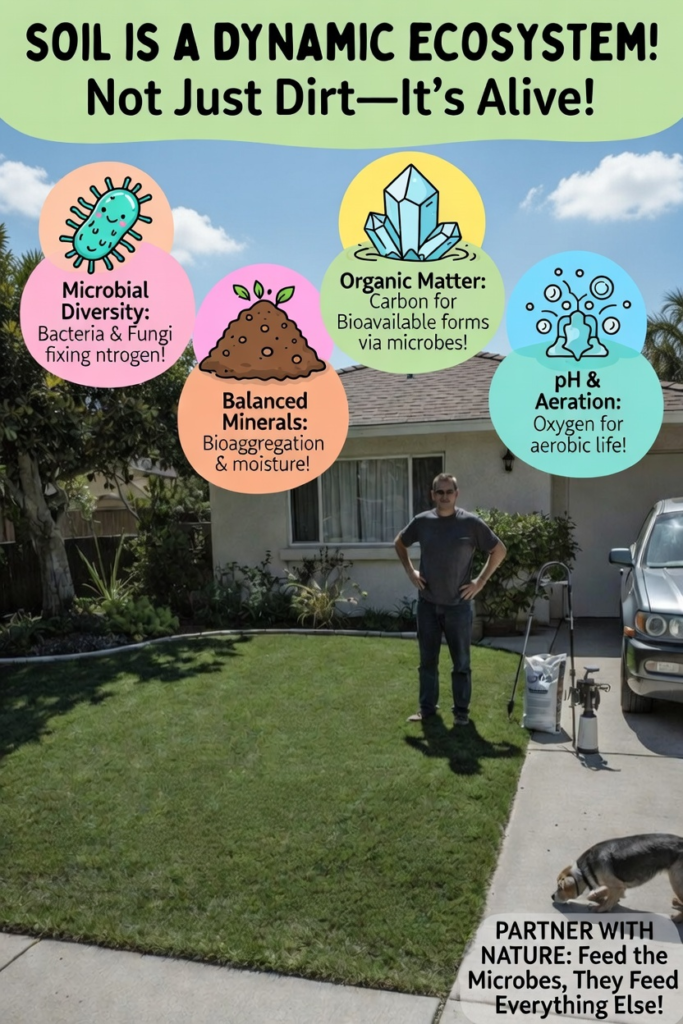
- Microbial Diversity: Bacteria, fungi, protozoa, nematodes—these are the workforce. Fungi (mycorrhizae) extend roots for nutrient/water access; bacteria fix nitrogen and solubilize minerals. Without them, soil compacts, loses structure, and can’t hold water(WHC)/carbon (WHC/OM drop 20-40% in chemical-heavy systems). Experts like Elaine Ingham emphasize the “soil food web”: Feed the microbes, and they feed everything else.
- Organic Matter and Carbon: For aggregation, moisture retention, and energy. Molasses or composts like our Pelletized Ultimate Compost (55% OM) build this—sequestering carbon while preventing erosion on those legacy-disturbed sites.
- Balanced Minerals (Electrical Salts): Not soluble floods, but bioavailable forms via microbes. Think Ewan Campbell’s (EFA NZ) tissue salts: Calcium for structure (fights compaction), silicon for resilience, boron for transport. Our SRC rock dust and Nature’s Brew accelerate this biologically, weathering minerals 10-100x faster without overload.
- pH and Aeration Balance: Neutral-ish (6-7) with oxygen for aerobic life. Compacted “broken dirt” from subdivisions starves this—aerate and fungal brews restore it.
In essence, soil needs partnership: Succession (nature’s repair crew) engages when we stop fighting it. At Stangl’s our stack (Nature’s Brew + MinRock + SRC) exemplifies this—hitting John Kempf’s targets for Si/Ca/B while fostering transmutations (e.g., Si + C → Ca via PNSB microbes).
What Plants Really Need: Symbiosis, Not Synthetics
Plants don’t “eat” fertilizers—they farm microbes in the rhizophagy cycle (Dr. James White’s discovery). Roots exude sugars (up to 40% of photosynthates) to recruit bacteria/fungi, which deliver “electrical” nutrients (bioavailable ions) in exchange. This builds resilience: Deeper roots (drought-proof), thicker walls (pest-resistant), and self-regulation (fewer weeds as “janitors”).
- Key Needs: Carbon energy (molasses), hormones (kelp cytokinins/auxins for growth/signaling), suppressants (squid chitin for pathogen control), and diverse microbes (your BAM NTS/LAB for antioxidants/ISR).
- Why Not Synthetics?: They bypass this dance, killing fungi, spiking bacteria, creating anaerobic messes. Plants get a temporary high (quick green), but weaken long-term—needing more inputs as biology dies.
On “broken dirt” (post-forest clearing, over-farmed then subdivisions), plants struggle without this microbial network—legacy issues like low OM, compaction, and nutrient lockup make natural succession slow. Synthetics mask it, but don’t heal.
Devil’s Advocate: Why Synthetics “Work” on Broken Dirt (Short-Term Illusion)
On disturbed lands, fertilizers and sprays often seem like the only quick win, especially in spring when visuals matter most. Here’s why they persist:
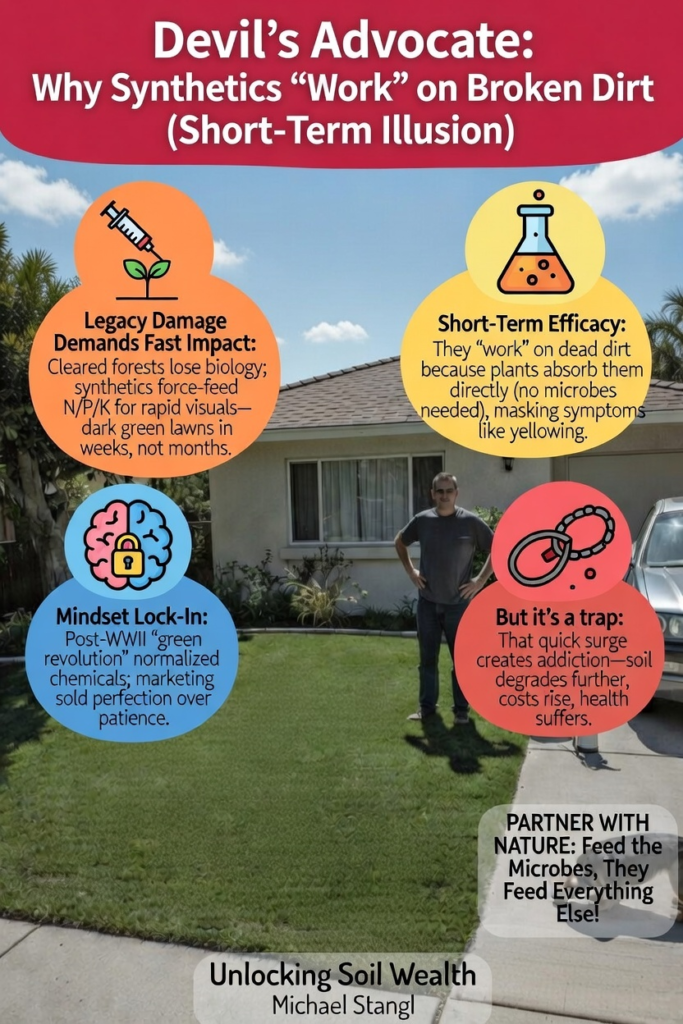
- Legacy Damage Demands Fast Impact: Cleared forests lose topsoil biology; farming depletes OM/minerals; subdivisions compact with heavy machinery. Succession (weeds to grasses to trees) tries to rebuild, but it’s gradual. Synthetics force-feed N/P/K for rapid visuals—dark green lawns in weeks, not months—appealing to ego (neighbor envy) and practicality (HOA rules or quick sales). In spring, post-winter stress amplifies this: Cold soils slow organics, but synthetics dissolve instantly.
- Short-Term Efficacy: They “work” on dead dirt because plants absorb them directly (no microbes needed), masking symptoms like yellowing or weeds. Devil’s advocate: Without them, bare patches erode, pests invade—it’s a survival hack when biology’s absent.
- Mindset Lock-In: If we’d known rhizophagy or soil food webs 20 years ago, we’d have prioritized brews/composts from the start—preventing the “broken” cycle. Instead, post-WWII “green revolution” (ammo factories to fert plants) normalized chemicals, and marketing (Bernays-style) sold perfection over patience.
But it’s a trap: That quick surge creates addiction—soil degrades further, costs rise, health suffers. Our regen approach proves alternatives exist now—piloting on sections shows biology rebuilds even on Niagara clays.
The Precipice: 20 Years from Now (2046 Vision)
We’re at the tipping point—2026 science (rhizophagy, microbial transmutations) is mainstreaming biology. In 20 years:
- Biological Norm: Lawns on “fixed” soils via global regen (Christine Jones’ carbon farming, Nicole Masters’ holistic methods). Homeowners default to brews like ours—Nature’s Brew as the “fertilizer” equivalent, cutting water bills, eliminating sprays.
- Outcomes: Self-sustaining yards: Just yearly apps, 50-80% weed drop via Ca/Si boosts, resilient against extremes (climate change amps this). Ego shifts from “perfect green” to “living beauty”—pets/kids safe, pollinators thriving.
- Cultural Flip: Synthetics become the “old way”—regulated for runoff, phased out like lead paint. Our work at Stangl’s pioneers this: Documented results inspire the masses.
If we’d acted in 2006, 2026 would be utopia. But starting now? 2046 will thank us. Ready to lead the charge? DM @StanglsEnviro or hit stangls.com—let’s build that future yard by yard.
Rooted in regen,
Unlocking Soil Wealth
Michael Stangl