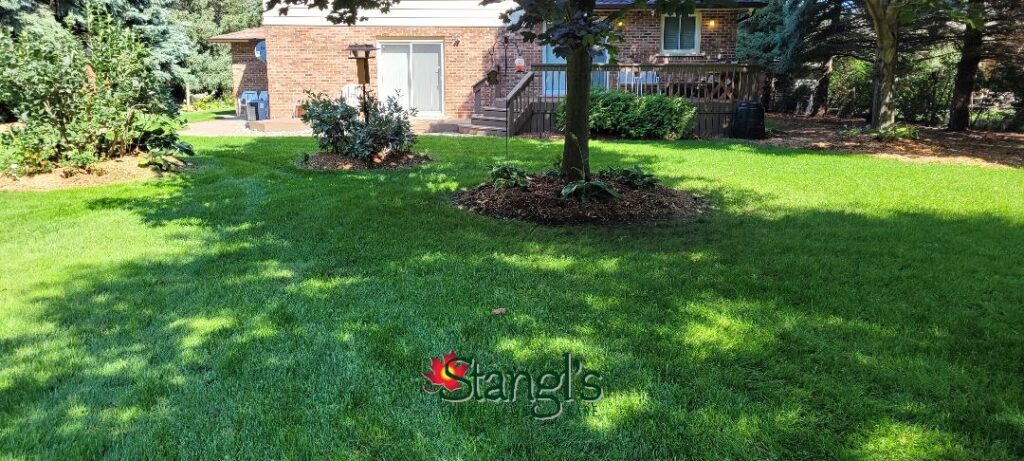

Spring ads have started flooding in: “50% off lawn sprays,” “instant green bundles,” or “pro services” with limited-time offers and BOGO deals. Sounds easy enough, right? But Ewan Campbell from Ecofarm Aotearoa New Zealand nails it: These are profit-driven hooks, not real solutions. Modern agriculture—and lawn care by extension—took a wrong turn about 100 years ago, ditching natural guano for inferior phosphates without coming clean. Why? Salesmen with likable personalities built empires on buy-in from farmers, landscapers, golf courses, and sports fields, all echoing “this works” because everyone else jumped on board. Hey are you tired of chasing that “perfect” green lawn that fades by summer?
The truth? These products do work on broken dirt—delivering quick visual results that feed our shallow egos, like that instant lush look we crave. It’s straight out of Edward Bernays’ playbook: The father of modern PR knew how to manufacture desires, turning “green perfection” into a must-have under the guise of health and beauty. But it’s farther from nature than ever—these inputs shift soil to lifeless dirt, killing biology and locking you into cycles of more fixes. (Side note: Fertilizer factories started as ammo plants post-WWII; they’re not going anywhere, but that doesn’t mean your lawn has to suffer.) At stangls.com, we’re all about no-BS 2026 science—backed by experts like Dr. James White (rhizophagy cycle), Elaine Ingham (soil food web), John Kempf (regenerative ag), Matt Powers, David Johnson, Christine Jones, Kris Nichols, Gerry Gillespie, Nicole Masters, Glen Rybenburg, Dr. Thomas Dykstra, and more. This isn’t fringe; it’s scalable, happening planet-wide from farms to backyards. Lawn care’s ego-driven, sure—but you can break free. Let’s unpack why and how, systems-style.
The Product Trap: Quick Fixes That Feed Ego, Not Soil
People love simple: Dump on fertilizers, spray weeds, get green and dead weeds. It appeals to our rush for perfection—neighbors envy. But as Ewan says, we’ve been belittled into thinking salesmen or bank managers know more than us stewards. Conventional inputs treat symptoms: Soluble NPK surges growth, but bypass biology, creating stress like potassium nitrate (explosive in the wrong form). Result? Compacted, anaerobic dirt—low organic matter, poor water-holding, carbon loss. Weeds grow as “janitors” cleaning imbalances; pests as “garbage collectors.” Costs climb 20-50% with global swings, plus runoff harms waterways and health (allergies, epigenetics).
Ewan’s challenge: Admit flaws. These “deals” validate the industry—lawn pros, academia stuck in 1840s NPK myths (Justus von Liebig admitted it ignored biology). But 2026 science shows otherwise. Others keep repeating the insanity? That’s ego (Edging God Out or Edging Green Out)and habit. At Stangl’s, we’ve shifted: 45+ years experience, 100% regen since 2015. No sales hype—just systems that work for Niagara’s variable weather, no 2025 diseases nor insects. Homeowners like you visit stangls.com for real talk: Test your soil, see the difference.
Unlocking Nature’s System: Biology’s Electrical Dance Over Chemical Hype
Plants don’t eat chemicals—they farm microbes in the rhizophagy cycle (Dr. White’s Rutgers discovery). Roots signal sugars, microbes deliver bioavailable nutrients as “electrical salts” (Ewan’s term for mineral combos like calcium phosphate for structure). Biology turns raw elements into usable forms—think cyanobacteria booming in moist conditions, oxidizing carbon for summer growth.
Conventional systems approach of fertilizers and sprays? They kills fungi, spike bacteria, turn living soil into “dead dirt on life support.” Brief on salts: There are 12 key ones (e.g., silica for resilience), formed naturally via microbes—not products. Hydroponics skips this intelligence; so do chemical sprays. In lawns, it means thirstier turf needing endless water/apps. But nature’s network (mycelium “internet”) is smarter: Plants request specifics—silica for tall grass, carbon for seeds. Climates vary (dry spots for wine, wet for high-yield)—your backyard too. Scalable proof: Global regen from Christine Jones’ carbon farming to Nicole Masters‘ holistic grazing. Ego industry? We’re teaching homeowners to partner with biology, not fight it.
| Quick-Fix Conventional | Biology-First Systems |
|---|---|
| Ego boost: Instant visual green on dead dirt. | Real health: Deeper roots, resilient turf. |
| Symptom sprays: More weeds/pests follow. | Signals: Weeds as clues, microbes fix root causes. |
| Profit cycles: Yearly upsells, rising costs. | Independence: 30-50% input cuts, self-sustaining. |
| Far from nature: Runoff, health harms. | Planet-friendly: Carbon storage, biodiversity. |
My Shift: From Conventional Ego to Regen Reality
I started in 1981 pushing synthetics—defensive, like pros today. Health tanked (headaches, dilated pupils, dizziness), lawns declined despite more inputs. Pivot? Understanding plants farm biology. Now, we test microbial life (fungal:bacterial ratios, EC 0.2-1.0 mS/cm)—tools no conventional service uses. Results? Healthier resilient lawns, fewer problems, global consulting. Backed by experts like Matt Powers and Elaine Ingham, it’s not about perfection; it’s humility: “I learn every day.” Lawn care’s ego trap? Homeowners, you can escape—stangls.com shares blogs on this scalable shift, from backyards to farms worldwide.
Why Change in 2026? Simple Truths Behind the Hype
Ewan’s “enough of this rubbish“: Contrast old wrongs for new paths. Allergies spiking? Often misblamed on gluten/dairy—really poisons like glyphosate. Same in lawns: Sprays create “hangovers.” We’ve been product-oriented; time for systems. Stop insanity—challenge yourself. Others stick to old ways? That’s denial; science evolves (rhizophagy, soil food web). This is happening: Matt Powers’ education, David Johnson’s compost tech, Kris Nichols’ microbial research—scalable for any homeowner.
Steps for Your Backyard System

Ready to ditch the hype and build a real, living lawn? Here’s a straightforward, no-BS guide based on 2026 science—like the rhizophagy cycle and electrical salts from experts such as Dr. James White, Elaine Ingham, Matt Powers, and Ewan Campbell. This isn’t about quick products; it’s a systems approach to restore biology, turning your dirt back into thriving soil. At Stangl’s Enviro Lawn Care (stangls.com), we’ve been doing this for 45+ years—shifting from conventional traps to 100% regenerative since 2015. We test, measure, and adapt for Niagara’s tough weather, delivering denser turf, deeper roots, and zero diseases in 2025. No ego perfection; just nature’s intelligence at work. Let’s break it down step by step, incorporating our proven tools like Nature’s Brew (a custom microbial ferment), MinRock Pelletized Ultimate Compost, and Spanish River Carbonatite (SRC) rock dust—scalable for any backyard.
- Observe: Start by seeing weeds and pests as signals, not enemies. Dandelions or prickly weeds? They often scream low calcium, compaction, or imbalances—nature’s way of fixing what’s broken. Walk your yard: Note bare spots, yellowing, or sogginess. At Stangl’s, we teach this as the first step in our consultations—spot the clues before any inputs.
- Assess: Get a pulse on your soil’s biology. Use a simple EC meter (aim for 0.2-1.0 mS/cm to avoid salt overload killing microbes) or send samples for our epifluorescence microscopy (fungal:bacterial ratios tell the real story). Check for silicon (Si), calcium (Ca), and boron (B) levels—per John Kempf, these build plant defenses (Si for cell walls, Ca for structure, B for nutrient flow). Niagara soils often leach these; our tests show where you’re short, guiding targeted fixes without guesswork.
- Build: Feed the microbes to kickstart the electrical dance. Introduce diversity with our Nature’s Brew—a living consortium based on a 4+ year Johnson-Su bioreactor (fungal-dominant compost with pumpkin layers for worm highways and aeration). It stacks fulvic acid for chelation, Sea-90 ocean minerals (90+ traces), AgriGro prebiotics, Squid Juice (chitin/aminos for pathogen suppression, N/P/K traces), C-Bio kelp (hormones like cytokinins for root growth), molasses (carbon energy), LAB serum (lactic ferments for exclusion), and BAM NTS (anaerobes like Lactobacillus and PNSB for antioxidants). Alone, it explodes soil life, solubilizes nutrients, boosts resilience, and even catalyzes potential transmutations (e.g., Si + C → Ca). Pair it with MinRock Pelletized (high OM, boron 529 ppm, wollastonite Si/Ca for structure) and SRC (reactive rock dust with 21.5% Ca, 11.3% Si) for the ultimate stack: SRC weathers fast via Brew’s acids (releasing Ca/Mg/P/K), MinRock amplifies B/Si for pest-proofing, and the combo rebuilds aggregation/WHC in weeks—dropping dandelion/prickly weed germination 50-80% by raising Ca and outcompeting them. Apply as soil drench/foliar (1:100-500 dilution, 7x April-Oct); we handle sourcing and custom mixes at stangls.com.
- Adapt: Tailor to your yard—start gradual with a pilot section (e.g., 1/4 of your lawn). Broadcast SRC (1-2 tons/acre equivalent for small yards) and MinRock (500-1000 lbs/acre) in fall/winter for base minerals, then layer Nature’s Brew monthly. Watch resilience grow: Thicker cell walls (from Si/Ca synergy), fewer inputs (30-50% cuts), massive water savings (your bills drop). Meets Kempf’s targets? Our stack hits Si/Ca fully (1370+ lbs Si, 1312+ lbs Ca/acre at rates), B partially (0.6+ lbs—boost if needed). Adjust based on retests; Stangl’s global consulting fine-tunes for your climate, ensuring self-sustaining cycles.
- Learn: Dive deeper with experts—our blogs at stangls.com pull from Ewan Campbell, Glen (EFA), Dr. Thomas Dykstra, Matt Powers, David Johnson, Christine Jones, Kris Nichols, Gerry Gillespie, Nicole Masters, and more. No fluff; just scalable regen happening worldwide, from farms to ego-free lawns. We’ve documented side-by-sides: Darker green, faster recovery, near-zero pests—results speak louder than ads.
Your lawn awaits the biological revolution—healthier, cheaper, ego-free. Questions? DM @StanglsEnviro or visit stangls.com for consultations, tests, or custom brews. Let’s stop the insanity together.
Rooted in real science,
Unlocking Soil Wealth
Michael Stangl