
Humanity’s shift from nature didn’t start with ego—it started with necessity. Centuries of tillage and overuse turned fertile soil into depleted dirt, forcing us to find ways to “fix” it. We thought we could restore growth with fertilizers and sprays. But nature unlocked “soil wealth” long before us: an abundant, self-sustaining system teeming with life, diversity, and resilience. Yet we’ve disturbed it, destroying the very investment we’re trying to build—soil life diversity. Let’s look at this like investing money: what we didn’t know didn’t hurt us, but now we know. If you’re pouring your wealth into inputs that create a negative feedback loop, you’re trapped in a cycle of diminishing returns. Would you keep investing in a fund that demands more money just to break even—or writes off your losses as a “tax benefit”?
The Necessity That Led Us Astray
For centuries, we viewed soil as an infinite resource. Tillage exposed it to erosion, stripping organic matter and life. By the 1800s, soils were dirt—exhausted from overuse. Justus von Liebig’s 1840 NPK theory offered a lifeline: add nitrogen, phosphorus, potassium, and grow. It was a necessity at the time, but Liebig himself later admitted it was incomplete, emphasizing organic matter and biology. The science evolved—Sir Albert Howard championed composting as the “law of return” in the early 1900s, William Albrecht linked mineral balance to health in the mid-1900s, Elaine Ingham revealed the soil food web in the 1980s-90s—but the industry ignored it. Instead, post-WWII chemical companies pivoted war-era synthetics to farms and lawns, creating a fragile system dependent on more inputs.
The Marketing Machine: Edward Bernays and the Manipulation of Need
What kept this incomplete system alive? Marketing genius Edward Bernays—the “father of public relations”—who manipulated public opinion for profit in the early 1900s. Bernays turned necessities into desires, like making bacon a “healthy breakfast” staple or cigarettes “torches of freedom” for women. The chemical industry borrowed his playbook: fertilizers and sprays as “miracle solutions” for perfect lawns and bountiful farms. Today, it’s the same with pharma and ag inputs—ads promise quick fixes while downplaying harm. “Green” chemicals, eco-labels, and “just one more spray” keep you hooked. It’s not science; it’s sales.
The Negative Feedback Loop: A Bad Investment
Think of your lawn or farm as a financial portfolio. Nature’s system is a high-yield investment: diverse soil life (bacteria, fungi, worms) generates “wealth” in organic matter, water-holding capacity, nutrient cycling, and resilience. It compounds over time—stronger plants, fewer problems, less cost.
Conventional inputs? They’re a Ponzi scheme:
Tillage: “Invest” in opening soil—get short-term aeration, but long-term compaction (300+ PSI vs. ideal 100–150). More tillage needed = more “deposits.”
Fertilizers: Salts spike growth, but bacteria devour 5x carbon for every N unit, “burning” organic matter. Soil collapses, holds less water—drought stress hits. More fertilizer to “fix” = endless reinvestment.
Sprays: Kill “pests,” but wipe out biology. Weak plants signal more insects/disease. More sprays = compounding losses.
You invest more to break even—or write off “losses” as normal (brown lawns, grubs, weeds). It’s a negative feedback loop: inputs destroy soil diversity, requiring more inputs. What started as necessity became dependency—now we know better.
Nature’s Positive Loop: Unlocking Real Wealth
Regenerative unlocks soil wealth by building, not destroying:
- Feed biology — microbes convert minerals into functional forms, increasing organic matter 1–2% per year.
- Minimal tillage — cover crops and roots break compaction naturally, boosting infiltration 20–50%. While we aim for no tillage long-term, intelligent tillage—shallow, minimal, and timed right—can be a necessary tool during transitions to break initial compaction without destroying structure. Similarly, some inputs may be required depending on context, but the goal is to phase them out as biology takes over.
- No sprays — diverse microbes (fungal dominance) suppress pathogens like Fusarium (endophyte, not enemy).
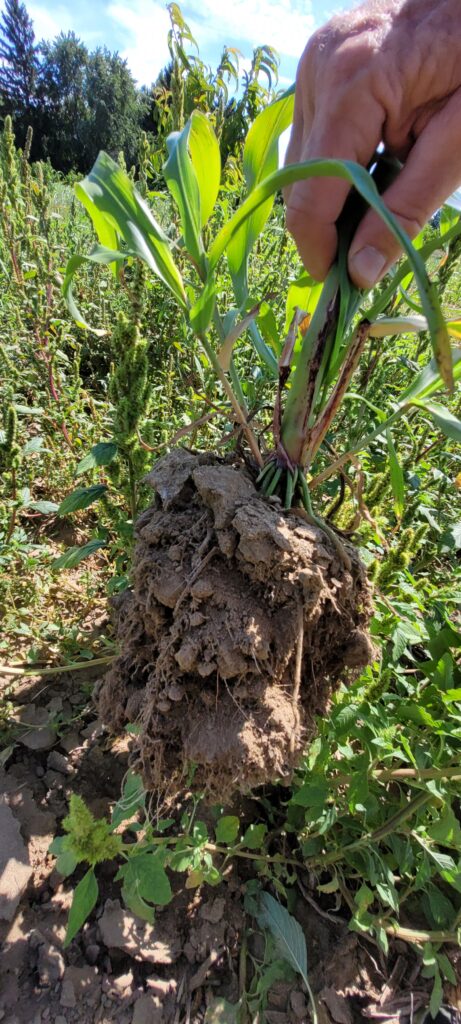
Result? Positive feedback: healthier soil holds more water (less irrigation), sequesters carbon, repels pests/disease, and grows resilient turf. Your “investment” compounds—lower costs, higher vitality. No “tax write-offs” for failures.
Break the Cycle: Invest in Living Soil
The industry sells the lie because it profits from your dependency. But you now know better. Don’t accept “it’s just the way it is.” Unlock soil wealth with regenerative care—from your front lawn to the farm.
Ready to invest smart? Call (905) 641-8133.
Michael Stangl
Stangl’s Enviro Lawn Care
#AwakenSoil #Stangls #Niagara #RegenerativeLawn #EcoSafe