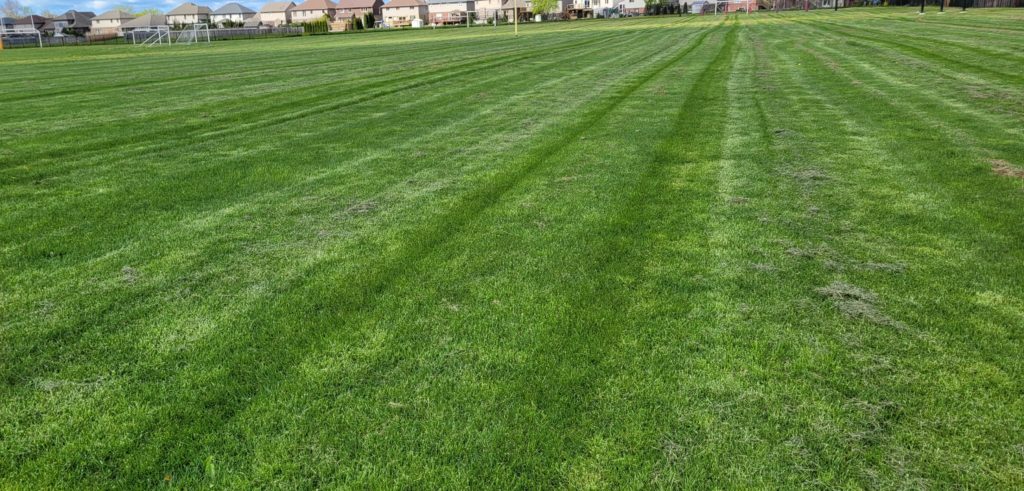
At Stangl’s Enviro Lawn Care, we’re calling out a dangerous myth that Niagara Region homeowners and property managers cling to: the idea that a “perfect,” weed-free lawn is a simple fix. It’s time for a paradigm shift—lawn care isn’t that simple, and the chemical methods you rely on are causing widespread harm. This is your wake-up call.
The Myth of Simplicity: A Toxic Paradigm
You shake your head at get-rich-quick schemes, saying, “If it were that simple, everyone would be rich.” You dismiss snake oil scams as too good to be true. Yet, you blindly believe lawn care is simple: just fertilize and spray, and you’ll have a perfect lawn. If it were that simple, everyone would have flawless lawns—but they don’t. Conventional lawn care, pushed since the 1960s, has sold you a lie that a weed-free lawn equals success. It’s a myth as hollow as any scam, requiring excessive fertilizers and sprays that harm more than they help. Weeds persist, insects return, diseases flare—because you’re not fixing the problem; you’re masking it with poison, at a devastating cost.
The Real Cost: Harm at Every Level
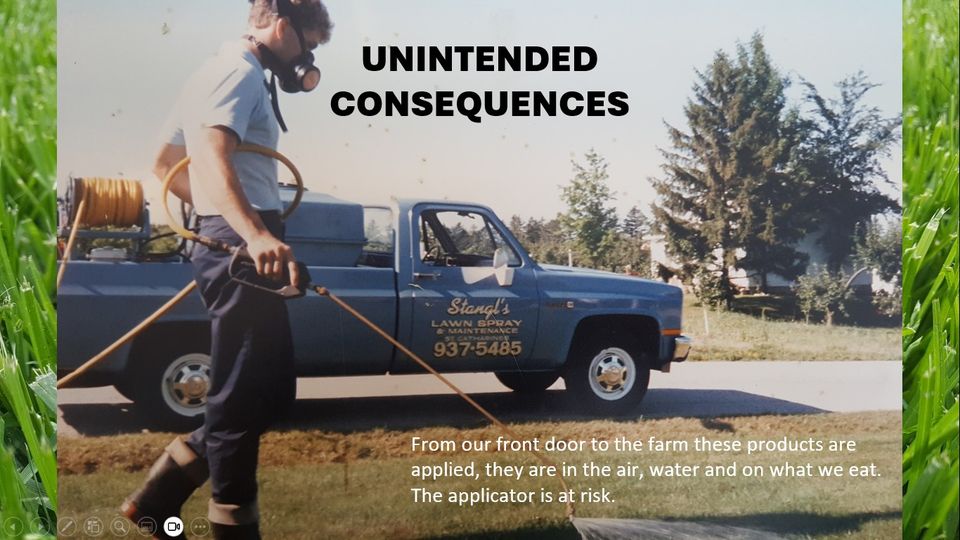
The impact of your “simple” lawn care ripples far beyond your yard. Applicators like me, who once sprayed chemicals like organophosphates and Dursban, faced toxic updrafts around homes, leaving me with dilated pupils, dizziness, and headaches. Anthony Landgraff, a former golf course superintendent, left the industry after similar exposure, saying, “I left over my concern with the exposure I was facing daily.” Seasonal workers—often university students—risk cancer years later, forgotten victims of your chemical demands. At home, your family and pets are exposed to these toxins; a Niagara-on-the-Lake puppy died from cyanobacteria linked to chemical runoff during COVID. Neighborhoods suffer as chemicals wash into Lake Erie, the Niagara River and Lake Ontario, fueling algal blooms—University of Buffalo studies (2017, 2019) found antidepressants in fish, a sign of broader contamination. Communities and the planet bear the burden, with epigenetic harm threatening future generations—all because you think a weed-free lawn is “simple.”
The Truth: It’s Complex—and That’s Why Regenerative Works
Lawn care isn’t simple; it’s complex. Weeds, insects, and diseases are outcomes of unhealthy dirt, not problems to be sprayed away. At Stangl’s, our regenerative approach heals the soil naturally with monthly applications of Nature’s Brew and PUC Pelletized Ultimate Compost, addressing root causes like compaction (ideal: 100–150 PSI) and low microbial biomass using our 14-point diagnostic tool. It takes time—24 months plus—but the result is a resilient lawn that doesn’t poison anyone. You might see weeds or insects during the transition; that’s nature working, not failing. Chemicals promise simplicity but deliver harm; regenerative care embraces complexity to create lasting health.
Stop the Harm—Choose a Smarter Path
Your “simple” lawn care is a harmful myth that endangers applicators, your home, neighborhood, community, and planet. It’s not a quick fix—it’s a toxic cycle. Stop falling for the lie and start valuing real health over a shallow visual field. Switch to regenerative lawn care with Stangl’s and be part of the solution. Contact us at (905) 641-8133 today! #AwakenSoil #Stangls #Niagara #RegenerativeLawn #EcoSafe