Posted on June 14, 2025
At Stangl’s Enviro Lawn Care, we cut for turf performance, not eye candy—and it’s time Niagara Region homeowners rethink their mowing habits. Short cuts might look neat, but they harm cool-season grasses and living systems. Here’s how to mow smart, based on our June 6, 2025, observations.
Mowing for Health, Not Vanity
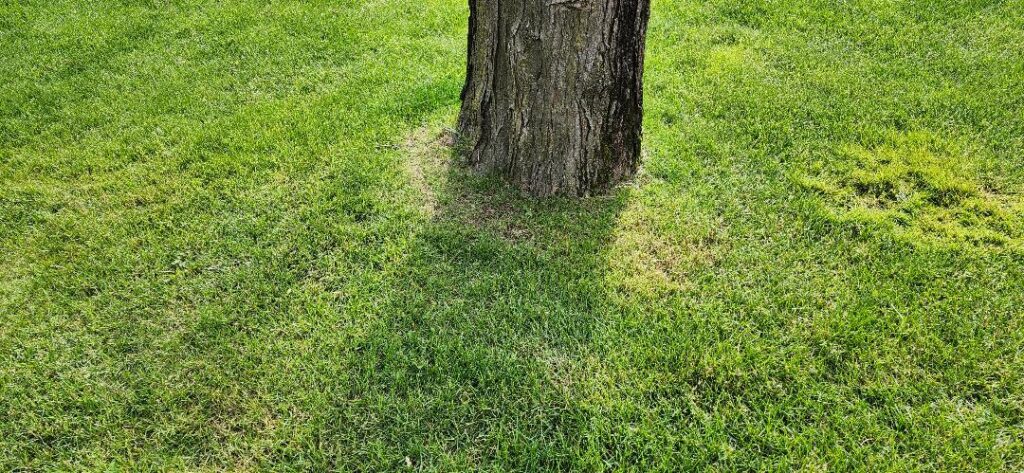
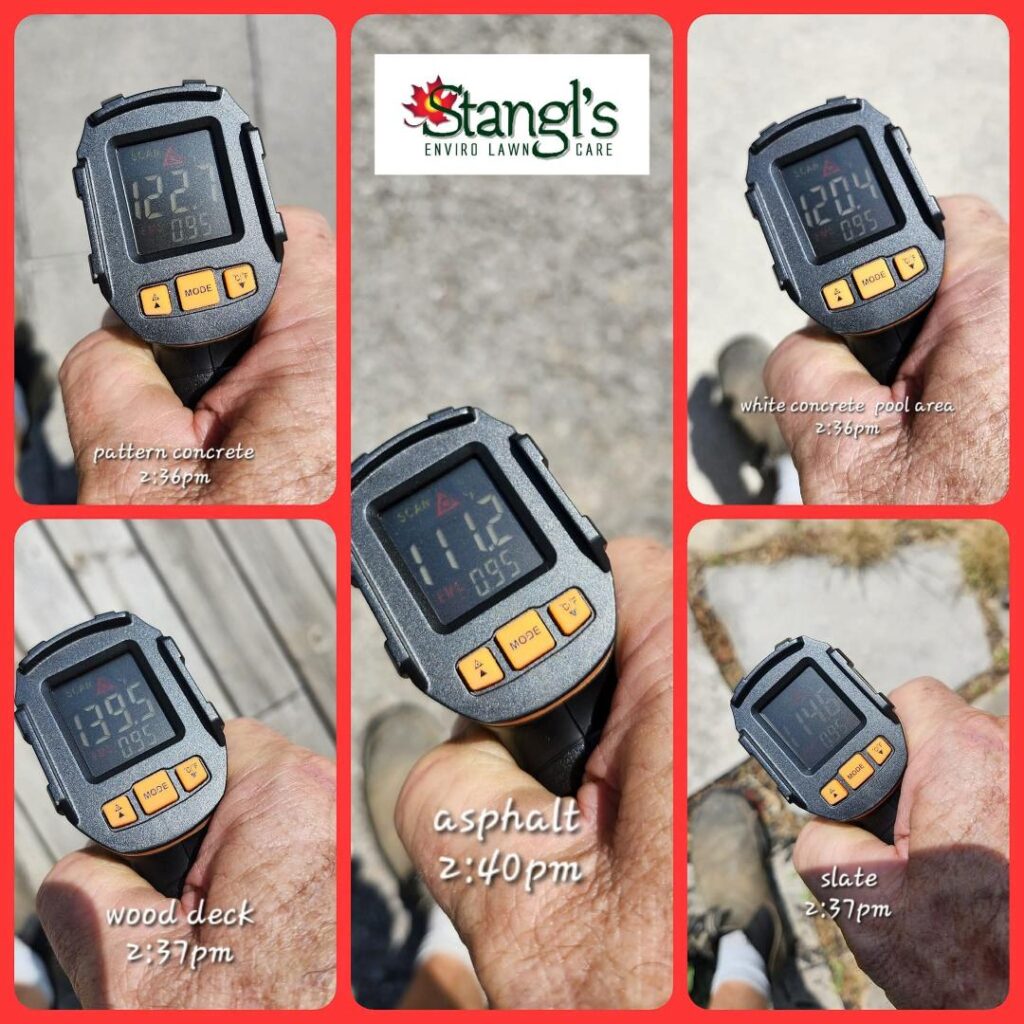
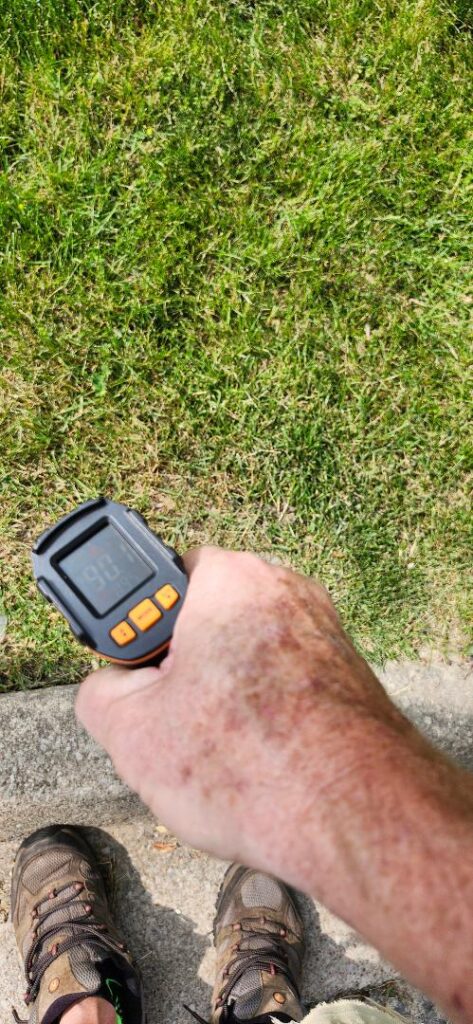
Most “hackers”—sorry, cutters—scalp lawns short for the visual field, reducing leaf blades, the plant’s solar panels for sugar production. This lets sunlight bake the soil surface, with infrared readings hitting over 135°F—way past the ideal 75°F or max 80°F. On June 6 at 3:50 PM, we measured 70°F under a tree but 90°F where edges were scalped at the curb line. High heat stresses crowns (woody tissues) and invites plant diversity like crabgrass to shield the soil, pushing sugar underground to boost soil health. We cut differently.
Our Mowing Strategy for Cool-Season Grasses
- Early Spring (Rain, Cool Days/Nights, 2.5″ Water): Start at 3 inches. Cool weather and moisture support growth, so raise the blade to protect leaf area.
- Hot Days, Cool Nights: Keep it at 3–3.5 inches. This maximizes photosynthesis and shields the soil.
- Hot Days and Nights: Go over 3 inches, skipping cuts when it’s too hot. Grass may fall over, but that’s fine—it’s adapting.
- Goldilocks Cut: Once a month, when weather’s just right, cut a bit shorter (e.g., 3 inches in sun, 2.5 inches in shade) to clean and tighten. We did this June 6 with our riding Bobcat mower, then returned to 3.5 inches.
- Fall Transition: Gradually cut shorter, with the last and first cuts short. A slight tear or cut into the crown (not scalping) encourages new shoots by disrupting auxin, boosting spring performance.
- Edge Care: use a mower to avoid the turning stress caused by a rider. Opt for a mower with adjustable wheels, allowing a slightly lower cut like planing for a smooth finish. Pair this with an edge trimmer to craft a clean, straight line, steering clear of the scalping common among others. Scalping dries out edges, heightens light exposure, and worsens the buildup of winter debris from snow melts—especially in problem areas like sidewalks, driveways, and interlock zones disturbed by gravel, crushings, debris, and hidden concrete, asphalt, or wood. The typical “mor-on” approach, slashing the width of the edger without care, overlooks these issues, putting additional stress on the turf.
- These are not golden rules; this can change per condition, timing, area, and many factors.
Measure Smart, Cut Right
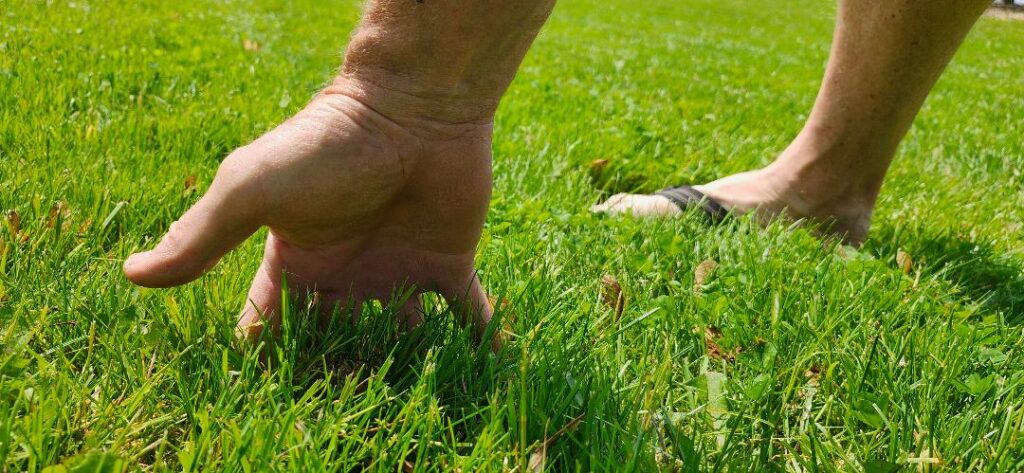
Forget guesswork—use your “bird finger.” Stick your hand to the ground; if grass blades reach your palm or higher (over 3 inches), it’s time to cut. If you remove clippings our monthly spraying with Nature’s Brew and applications of PUC will support what the clippings naturally return. If you leave clippings, cut every 5 days, not 7, to avoid too many clippings that can create their own problems.
Photos Prove the Point
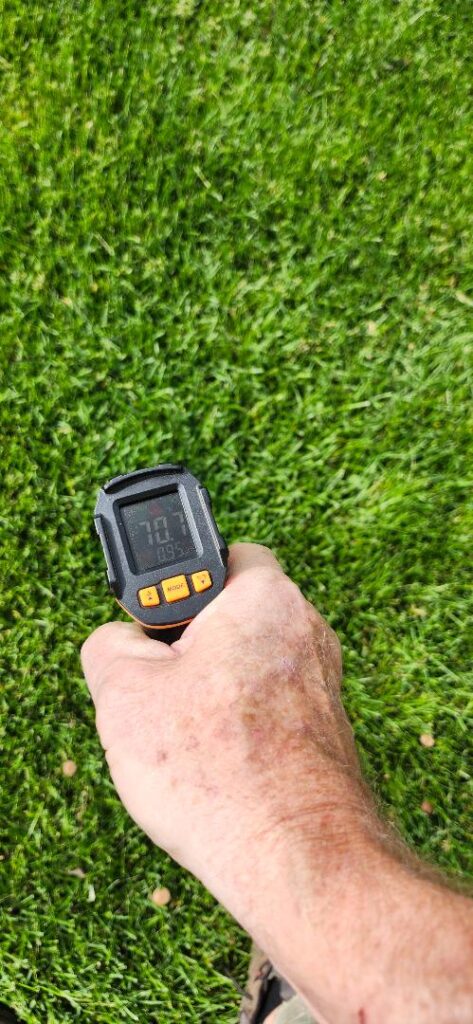
Our June 6 photos show the difference: lush turf at 70°F under a tree versus stressed, scalped edges at 90°F. Short cuts harm the living system—soil, plants, and you—while high cutting fosters resilience. Scalping invites crabgrass, a natural response to heat, proving nature’s wisdom over human vanity.
Join the Turf Performance Movement
Mowing high isn’t lazy—it’s smart, nurturing living systems over fleeting looks. Ditch the hackers’ ways and adopt a regimen that boosts soil health and grass vitality. Contact us at (905) 641-8133 to learn more! #AwakenSoil #Stangls #Niagara #RegenerativeLawn #EcoSafe